Your child is bright. They build incredible Lego cities, tell you elaborate stories, notice things nobody else does. And yet reading is a battle. Letters shuffle, words get guessed at, spelling changes from one day to the next, and homework ends in tears. You keep hearing “they’ll catch up,” but they are not catching up.
If this sounds familiar, you are not alone. Dyslexia affects roughly 1 in 10 to 1 in 5 people depending on how it is measured, and it has nothing to do with intelligence. The good news is that it is also one of the most treatable learning differences we know about. The important thing is to identify it early and get the right kind of help.
This guide covers the signs to watch for, how dyslexia testing works in South Africa, and what treatment options look like, including the Davis Method.
What is dyslexia, really?
The International Dyslexia Association defines dyslexia as a specific learning disability that is neurobiological in origin. It shows up as difficulty with accurate and fluent word recognition, plus poor spelling and decoding. These difficulties come from a weakness in the phonological part of language, the part that lets us pull words apart into sounds and match those sounds to letters.
In plain language: a child with dyslexia often thinks in pictures, not in sounds. When the classroom teaches reading by breaking words into sounds (phonics), the child is being asked to use the very skill that is weakest for them. That is why bright children with dyslexia can struggle so badly, and why the struggle is so frustrating. They are not lazy or slow. Their brain simply processes written language differently.
Signs to watch for
Dyslexia looks different at different ages, but these patterns are common:
- Trouble learning letter names and the sounds they make in the early grades
- Reading slowly, skipping words, or guessing at a word instead of sounding it out
- Spelling the same word differently in the same piece of writing
- Confusing similar-looking letters like b and d, or was and saw, past the age where it is typical
- Avoiding reading and writing, or becoming anxious and frustrated at homework time
- Strong verbal ability that does not show up in written work
- A family history of reading difficulties
One of the most telling signs is the “unexpectedness.” A child who is articulate, curious, and quick in conversation, but who reads far below that level, deserves a closer look rather than more waiting.
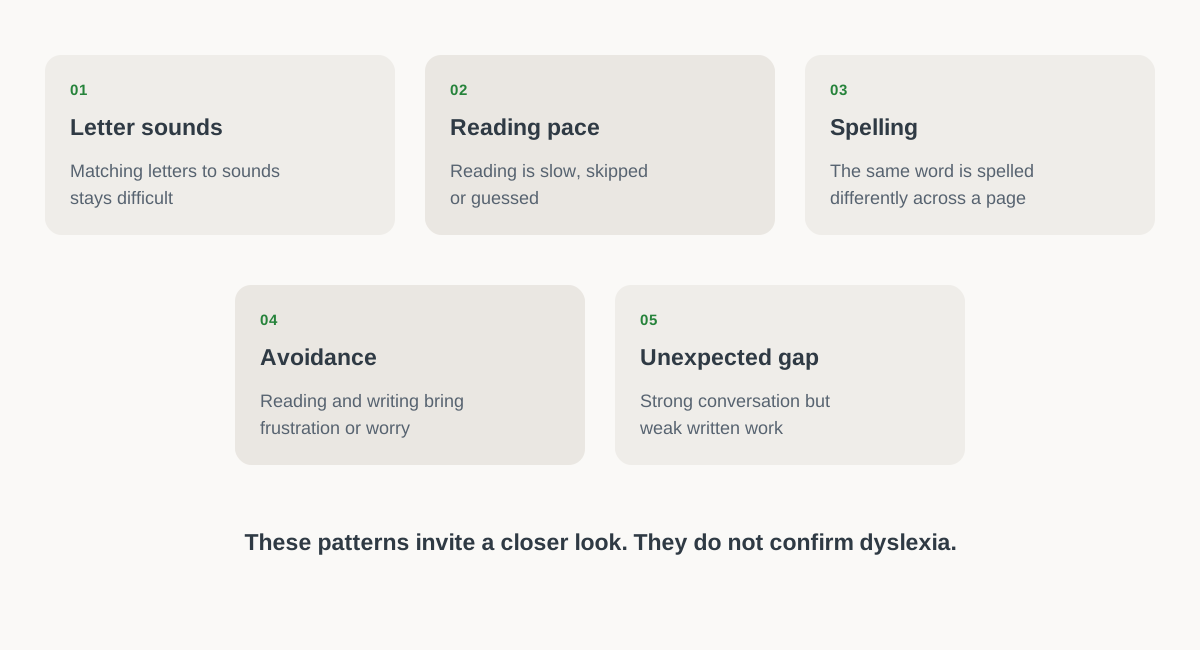
These patterns can point to a need for closer assessment. They do not confirm dyslexia on their own.
Why early identification matters
In South Africa, this matters more than you might think. The 2021 PIRLS study found that 81% of Grade 4 learners could not read for meaning in any language. That is a systemic problem, but it has a side effect: in a system where literacy struggles are common, a dyslexic child can stay invisible for years. Their difficulty is dismissed as “the school’s problem” or “they’ll catch up,” while the underlying cause goes unaddressed.
Research is consistent that the earlier children receive help, the better the results. The National Reading Panel, the landmark evidence review still cited by the US National Institutes of Health, found that explicit, systematic instruction makes the biggest difference, and that early help has the best outcomes. Waiting to see if a child “grows out of it” is the one approach with no evidence behind it.
How dyslexia is tested in South Africa
Dyslexia is diagnosed through a psychoeducational assessment carried out by a registered professional. In South Africa, only psychologists registered with the HPCSA may make this diagnosis, and educational psychologists are the specialists in this area.
A thorough assessment looks at several things:
- Cognitive ability and processing, to see the child’s strengths as well as the gaps
- Reading accuracy, fluency, and spelling against age expectations
- Phonological awareness, the sound-based skills at the heart of reading
- Attention and working memory, since these often travel with reading difficulties
- Emotional factors, because school struggle takes a toll
The assessment typically happens over a few child-friendly sessions, followed by a written report and a feedback meeting with you. The report tells you clearly what is going on, and it unlocks support. In public schools it feeds into the SIAS process, and it can be used to apply for exam accommodations. A proper assessment is the foundation every other decision sits on.
What treatment options exist?
Once you know what you are working with, the goal is the right intervention, and there are two broad families.
The first is structured literacy, the explicit, systematic teaching of how language works: sounds, sound-letter mapping, syllables, word parts, and meaning. This is the approach with the largest evidence base and the recommended foundation for most dyslexic learners. In practice it usually means regular sessions with a trained tutor or reading specialist.
The second is the approach we use in our practice: the Davis Method for dyslexia. It works differently, and for many visual-spatial learners it is a better fit.
What is the Davis Method?
The Davis Method comes from the work of Ron Davis, described in his book The Gift of Dyslexia. Davis was himself dyslexic, and he built the method around how dyslexic thinkers actually learn, rather than trying to force them into phonics.
The theory is that dyslexia is linked to a state Davis calls “disorientation.” When a dyslexic learner meets a symbol or word they cannot make sense of, their perception can become confused and unstable, and their focus slips. Instead of endless repetition to drill past this, the method teaches the learner to notice when their focus slips and reset it.
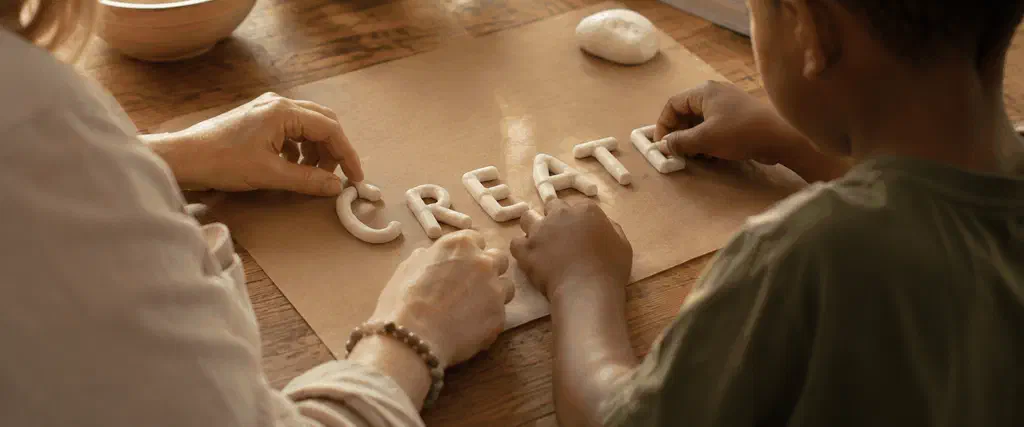
The signature technique is Symbol Mastery. The learner works one-on-one with a facilitator, using modelling clay to build the abstract symbols that cause trouble, starting with the alphabet and moving to the small words that carry the most confusion. By shaping the symbol and placing it in context, the learner builds a stable mental picture of it they can hold onto, rather than relying on memory tricks that keep failing.
The program is hands-on, drug-free, and delivered one-on-one, usually as an intensive block with follow-up practice at home. It is designed for ages eight and up. It does not promise a cure, and it does not use drills or medication. It works by removing the confusion at the root of the difficulty.
The research base is smaller than structured literacy’s, and an honest guide should say so. The most cited study is an Italian comparison from 2003, in which a group receiving Davis orientation counseling improved their reading speed at two to three times the rate of students in seven other intervention groups, though the Davis group also made more errors on one measure. It was a modest study, not a large independent trial. What it does show is that a meaning-first, visual approach can help a specific profile of learner a great deal. For a child who fits that profile, the difference can be substantial, and it deserves a place alongside the mainstream options.
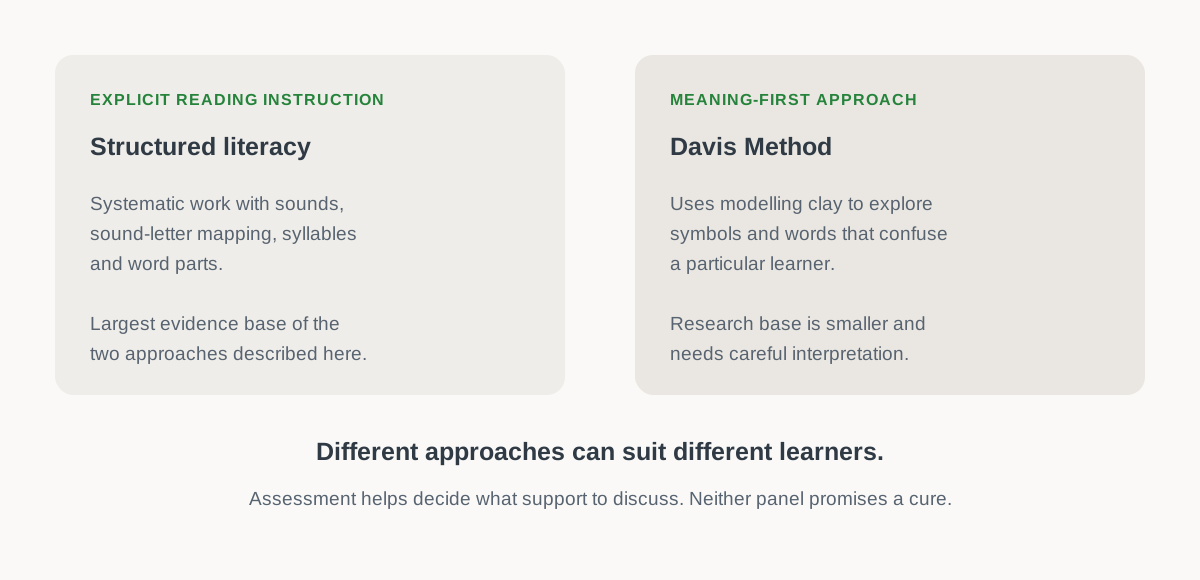
These are different approaches. Assessment and careful discussion help families decide what to explore.
In our practice, families come for an initial assessment first, so we can see how your child’s dyslexia actually presents, and then we recommend the fit that makes sense: Davis Methods, structured support, or a combination.
What you can do today
- Trust what you are seeing. If reading has been a struggle for more than a year despite good teaching, it is worth investigating.
- Talk to the school. Ask what has been tried and what the teacher observes. Keep samples of work and report card comments.
- Rule out vision and hearing first. A child who cannot see the page or hear the teacher clearly can look very much like a child with a reading difficulty. A quick check with an optometrist or audiologist is a sensible early step and makes an assessment easier to interpret.
- Arrange an assessment rather than guessing. A psychoeducational assessment gives you a clear diagnosis and a roadmap.
- If an assessment confirms dyslexia and your child is in the senior grades, find out about exam accommodations. Our guide to DBE concessions and accommodations walks through the application process.
Frequently Asked Questions
What is the Davis Method for dyslexia?
The Davis Method is a one-on-one, drug-free approach that works with how many dyslexic learners naturally think, in pictures rather than sounds. Learners use modelling clay to master the symbols and words that cause confusion, learn to notice when their focus slips and reset it, and build reading and spelling skills through practical multisensory work. It is usually delivered over an intensive block of sessions with follow-up practice at home.
What are the early signs of dyslexia in a child?
Common signs include persistent trouble matching letters to sounds, reading slowly or guessing at words, spelling the same word differently each time, avoiding reading and writing, and bright conversation paired with weak written work. These difficulties often show up in the Foundation Phase and are “unexpected” in the sense that the child is otherwise capable and well taught.
How is dyslexia diagnosed in South Africa?
Dyslexia is diagnosed through a psychoeducational assessment carried out by a registered psychologist, typically an educational psychologist. The assessment looks at cognitive ability, reading and spelling skills, phonological awareness, attention, and emotional factors, usually over a few sessions with a written report afterwards. Only HPCSA-registered professionals may make this diagnosis in South Africa.
Is dyslexia a sign of low intelligence?
No. Dyslexia is neurobiological and has no connection to intelligence. The International Dyslexia Association notes it is a specific difficulty with word recognition and spelling that is often unexpected in relation to a child’s other abilities. With the right instruction, almost all individuals with dyslexia can learn to read.
If you have been wondering whether it is dyslexia, or whether a different approach to reading could finally help your child, that is exactly the conversation we should have. As a registered Educational Psychologist (HPCSA Reg. No: PS 0158127), I can arrange an assessment, explain the results in plain language, and help you choose the intervention that fits your child’s way of thinking. Get in touch when you are ready. There is no need to keep guessing. If you recognise the same pattern in yourself as an adult, my guide to dyslexia in adults covers the signs, assessment and practical support.