Somewhere between the fifth birthday party and the Grade R parents’ meeting, the question arrives: will my child be ready for Grade 1?
Then the opinions start. A relative says he is clever, he will be fine. The teacher mentions she sometimes drifts off during ring time. Another mom is holding her son back a year and thinks you should too. And a late-night search hands you ten different checklists that all disagree.
School readiness feels mysterious only because everyone argues past each other, and it is much bigger than knowing the alphabet. In my work as a registered Educational Psychologist (HPCSA Reg. No: PS 0158127), this is the question I help parents answer most often, and the answer is nearly always the same: Grade 1 asks for a whole child, not just ABCs and 123s.
What Grade 1 actually asks of a child
Under CAPS, the national curriculum, Grade 1 is where formal learning starts. Before your child can benefit from it, the school day depends on things like:
- Listening to instructions and carrying them out
- Sitting and focusing on a task even when it gets tricky
- Managing a pencil, a lunchbox, and a school bag
- Coping when a friend takes the toy they wanted
- Asking an adult for help
Notice what is not on that list: reading fluently, writing sentences, or doing sums. Many children arrive in Grade 1 unable to do those things and thrive anyway. Others arrive knowing all their letters and still struggle, because the gap is somewhere else entirely.
The Grade 1 readiness checklist
Use this checklist at home over a week or two, not in one sitting. Young children have wobbly days. You are looking for the overall pattern across six areas.
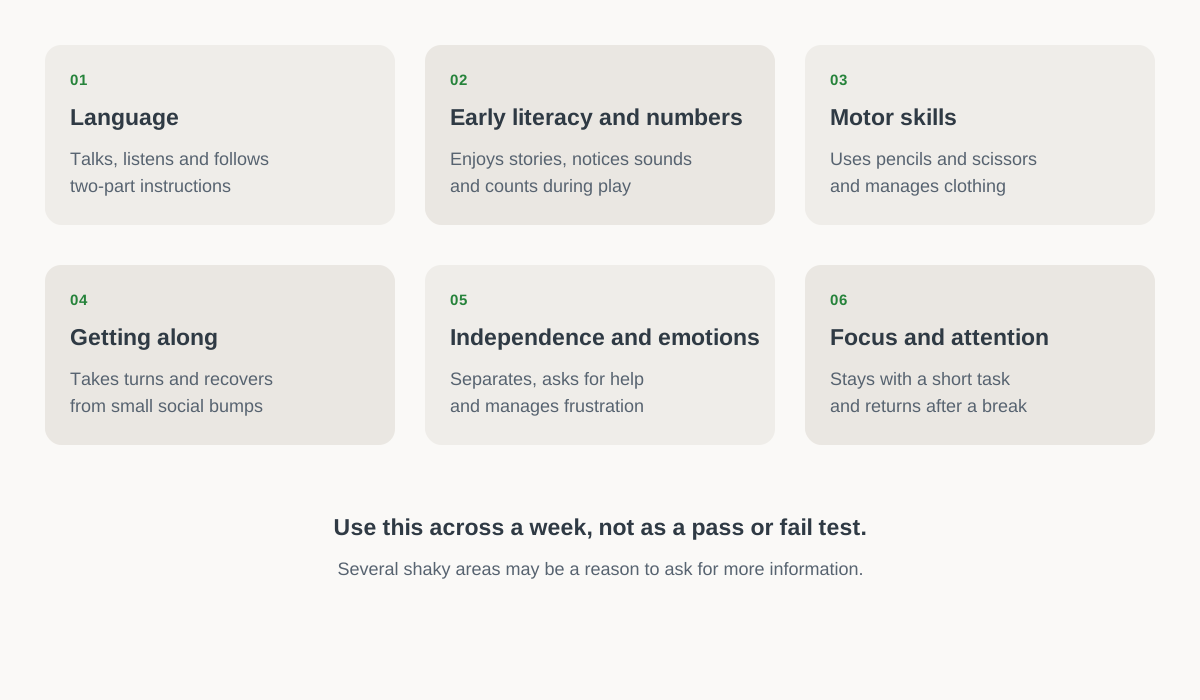
Grade 1 readiness includes language, movement, relationships, independence and attention as well as early academic skills.
Language and communication
- Speaks in full sentences and can tell you what happened at school
- Follows a two-part instruction, like “pack away the blocks and fetch your shoes”
- Answers simple questions about a story you have just read together
- Is understood by adults outside the family, not just by you
Early literacy and number awareness
- Recognises their own name when it is written down
- Shows interest in letters and sounds, maybe spotting the first letter of their name on a box
- Enjoys being read to and can sit through a short picture book
- Counts objects during play and understands ideas like bigger, smaller, more, and less
Motor skills
- Holds a crayon or pencil with a reasonably comfortable grip
- Uses scissors to cut along a rough line
- Manages buttons, zips, and their own shoes (velcro counts)
- Runs, climbs, and keeps their balance during active play
Getting along with others
- Plays alongside and with other children, not only next to them
- Takes turns in games, at least most of the time
- Recovers from small social bumps, like losing a turn, without falling apart
Independence and emotional maturity
- Separates from you without prolonged distress, such as at drop-off
- Bounces back from frustration within a few minutes rather than staying stuck
- Looks after their own belongings and toilet needs with little help
- Can tell an adult when something is wrong
Focus and attention
- Sits for a 10 to 15 minute activity, like a puzzle or colouring in, and sees it through
- Listens to a full story without needing constant redirection
- Comes back to a task after an interruption
How did it go? Most five-year-olds will miss a few items, and that is normal. One shaky area is worth strengthening at home. Several shaky areas, especially in the same group, are worth taking seriously.
Rule out the physical first
Before you conclude that any of these gaps are about readiness itself, check the physical side. A child who cannot hear the end of your instructions, or who sees the world through eyes that struggle to focus, can look inattentive or behind in every single area above. Glue ear, sight problems, and similar issues are common at this age and easy to miss. Your GP, paediatrician, optometrist, or audiologist can clear these quickly, and it makes everything else on this checklist far more trustworthy.
If several boxes feel shaky
First, take a breath. Finding a gap now is good timing: there is still room to do something about it.
Midway through Grade R, around June to August, is the ideal window for a formal school readiness assessment. Done through play, it builds a picture of how your child thinks and communicates, and it tells you whether Grade 1 now, or another year to grow, serves them better. Sometimes an extra year of Grade R is the kindest gift you can give a child, and it is a decision best made with information rather than worry.
If the concerns run deeper, if your child is older or the struggles continue into the school years, a psychoeducational assessment maps exactly where things are sticking. And where the real hurdle is confidence, separation worries, or big feelings rather than skills, play therapy gives young children a way to work on those feelings at their own pace.
For a broader look at when a fuller assessment makes sense, our guide to the 5 signs your child may need a psychoeducational assessment is a good companion read.
If you are weighing up which professional to see first, our guide to choosing between an occupational therapist, Educational Psychologist or psychiatrist explains where each one starts.
Frequently Asked Questions
What age must my child be to start Grade 1 in South Africa?
By law, children must turn 6 by 30 June of their Grade 1 year. But being old enough is not the same as being ready. Age decides when a child may start Grade 1; development decides when they should.
What should my child know before Grade 1?
Far less than most parents fear. Your child does not need to read or do sums before Grade 1. What matters more is the whole picture: understanding and using language, managing pencils and scissors, getting along with other children, coping with frustration, and looking after their own things.
When should we do a school readiness assessment?
If you are unsure about Grade 1 readiness, the sweet spot is midway through Grade R, around June to August. That leaves time to strengthen any shaky areas before registration deadlines and the new school year.
Are free online school readiness checklists reliable?
A checklist like this one is useful for spotting obvious gaps, but it cannot measure how a child thinks and reasons, or how they cope emotionally. Only a proper school readiness assessment, done through play by an Educational Psychologist, can give you that fuller picture.
Trust yourself, then check
You know your child better than any checklist. If reading this left you nodding along to more than a few items, or if you simply want certainty instead of guesswork, I offer school readiness assessments in Centurion and Middelburg, and I am happy to talk it through with you first. There is no obligation: send me a message and tell me what you are noticing.