
You notice it in small moments. Your child guesses a word from its first letter, loses their place on the page, or reads the same sentence several times. Homework takes much longer than it should, but extra reading at home has not changed the pattern.
If you are searching for how to get your child tested for dyslexia in South Africa, you do not have to choose the right label first. Start with a question and a record of support already tried.
As a registered Educational Psychologist (HPCSA Reg. No: PS 0158127), I assess learning and reading concerns in Centurion and Middelburg. You can start with a private assessment, or with support and referral through the public school system.
Start with the route that fits your situation
Private assessment
You can contact an HPCSA-registered psychologist directly. An educational psychologist is often the right starting point for reading, spelling and learning concerns.
The psychologist will ask about your child’s development, language background, school history and support already tried. Teacher input and recent schoolwork help the assessment answer a useful question rather than simply produce a label.
Private assessment has a cost, but it may offer an earlier appointment and a detailed report. Ask what it includes, how many sessions are expected, which language the tests use, and how the findings will be explained to you and the school.
Public school and SIAS
The public route starts with the school. SIAS means Screening, Identification, Assessment and Support. It is the Department of Basic Education process for identifying barriers to learning and arranging support.
The teacher usually records the concern and support provided with you on SNA 1, the Support Needs Assessment Form 1. The School-Based Support Team, or SBST, reviews this and helps develop or update an Individual Support Plan.
If district-level help is needed, the school can refer through DBE 120 to the District-Based Support Team, or DBST. The district team may assess the learner or advise the school, depending on available services. Ask which step your child is on, who coordinates the file, and when support will be reviewed.
The public route may be the right place to start if support has not yet been tried. Waiting times vary, so ask what can happen while you wait. A private report can be shared with the school, but the school still needs to review support through SIAS. If a change of school is being discussed, my guide to remedial, special and mainstream schools explains how SIAS approaches placement.
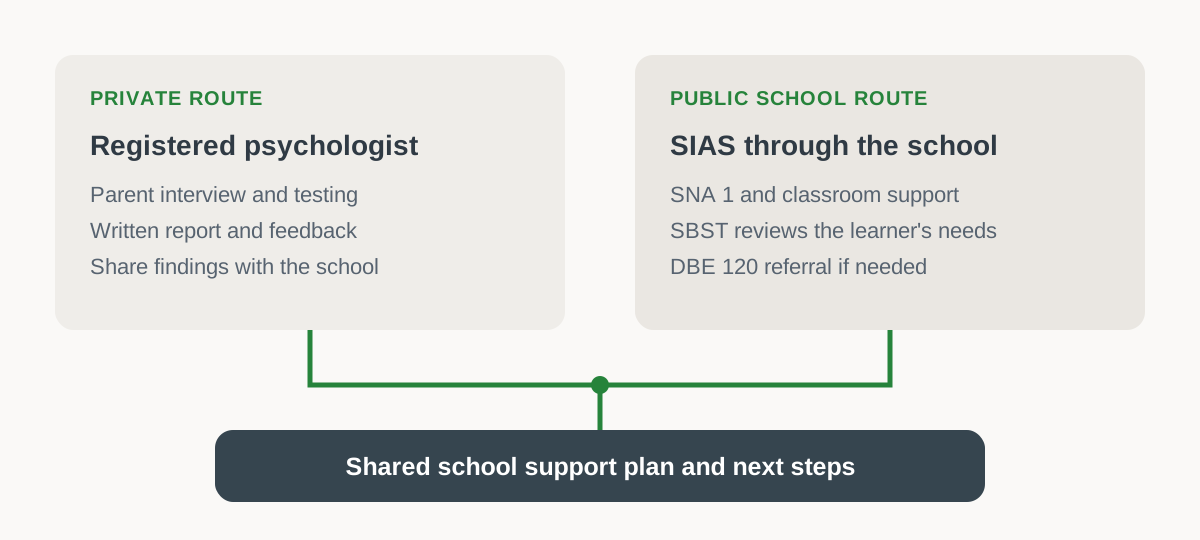
Private assessment and the public SIAS route are different starting points. Both can add information to the learner’s school support file.
Who can diagnose dyslexia?
Teachers often notice the pattern first. Remedial educators and speech-language therapists can provide screening, intervention and observations, while the school team records the support tried.
For a formal psychoeducational assessment and diagnostic conclusion, choose an HPCSA-registered psychologist. Educational psychologists assess cognitive and scholastic functioning and barriers to learning, explain the limits of their assessment, and refer on when needed. If you are comparing professionals, our guide to which professional to start with for a child may help you decide.
Before booking, ask whether the assessment covers reading, spelling, language-related skills and the wider learning picture. Ask how results will guide classroom support.
What happens during the assessment?
Assessment combines your child’s history, school information, work samples and several areas of testing. The tools depend on age, language and the referral question.
You may be asked about early language and literacy, family history, attendance, home and school language, and vision or hearing checks. The teacher may be asked about classroom reading, written work and support already provided.
Testing may cover:
- word reading accuracy and reading fluency
- spelling and written language
- phonological processing, which is noticing and working with the sounds in spoken words
- reading comprehension
- memory, processing speed and other learning skills where relevant
The feedback session should leave you knowing what is making reading difficult, which strength your child can use, and what to do next.
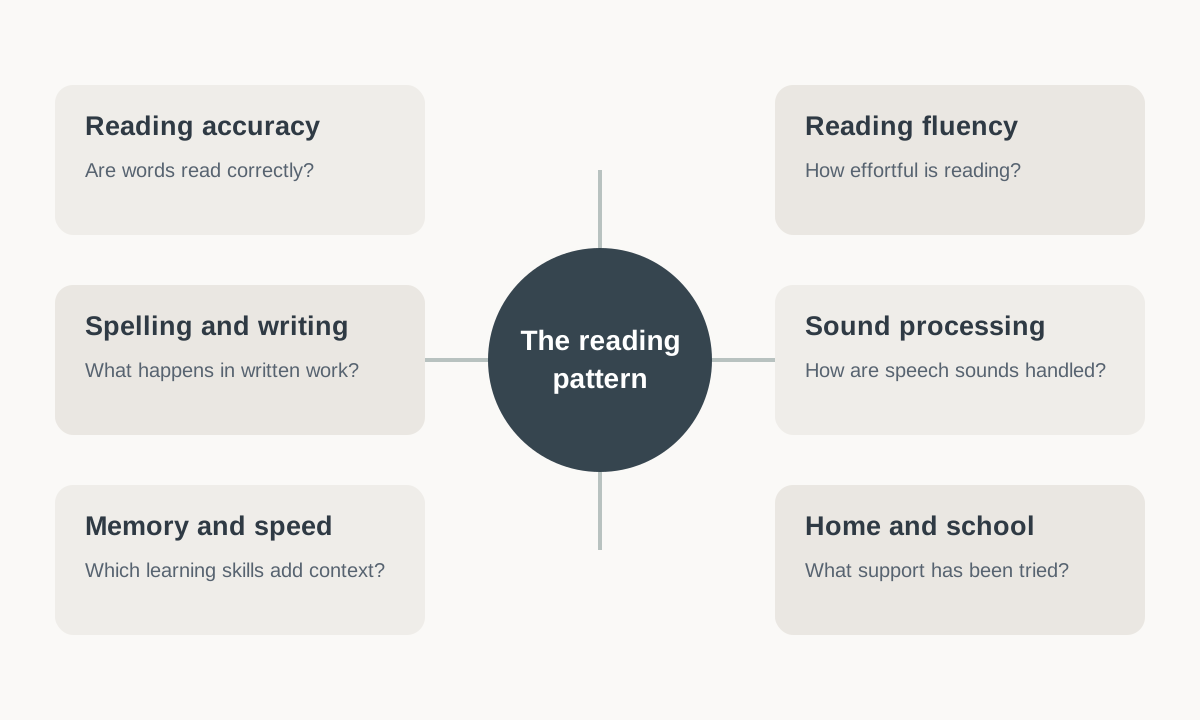
A reading assessment looks at the pattern around reading, not only whether a child can read a list of words.
Language and age matter
A reading assessment must take account of the language your child speaks, learns in and is tested in. Ask which language the test was standardised in and how your child’s language background will be considered. South African research has highlighted the need for more local assessment and support across African languages.
There is no single age at which every child should be tested. Teachers can identify concerns and begin support in the early grades. A formal assessment may help when difficulties continue despite support, using tests suited to your child’s developmental stage. Do not wait for a label before asking the school to help.
Rule out vision and hearing problems too
Vision or hearing difficulties can make reading and classroom learning harder. A GP or paediatrician can help rule out physical causes, and an optometrist or audiologist can check specific concerns such as headaches, squinting, ear infections or difficulty hearing the teacher. If symptoms are severe or affect your child’s daily life beyond reading, start with your GP rather than relying on tutoring alone.
What happens after the report?
The report should give the school something it can use, such as structured literacy support, changes to instructions, extra time or other accommodations linked to your child’s needs. The SBST can discuss the recommendations and record agreed support in the Individual Support Plan.
Exam accommodations are a separate application process. A report may provide evidence, but the school or examination body decides what documentation is needed and whether support is approved. Ask about the process early.
For more detail on the assessment process, you can read about a psychoeducational assessment. If your child needs reading support after assessment, our page on dyslexia intervention programmes explains that next conversation. Families preparing for exam support may also find our guide to IEB concessions and accommodations useful.
What you can do this week
- Write down the pattern. Note the reading tasks that cause difficulty, homework time and your child’s comments.
- Collect school information. Gather report cards, work samples and notes about support. Ask for a meeting with the teacher or SBST.
- Ask which SIAS step applies. Find out whether the school is completing SNA 1, reviewing an Individual Support Plan, or considering DBE 120.
- Check the basics. Confirm the language of instruction and whether vision and hearing have been checked.
- Choose the next assessment carefully. Ask what it covers, what the report will explain, and how findings can be shared with the school.
Frequently Asked Questions
Who can formally test for dyslexia in South Africa?
A formal psychoeducational assessment is usually conducted by an HPCSA-registered psychologist, often an educational psychologist when the concern is learning and reading. Teachers, remedial educators and speech-language therapists can contribute useful observations and support, but they do not replace the formal assessment.
At what age can my child be tested for dyslexia?
Reading difficulties can be noticed and supported from the first years of school. A formal assessment can be considered when the pattern persists despite teaching and support; the tests used should match your child’s age, language and stage of reading development.
What does a dyslexia assessment involve?
It usually includes a parent interview, school information, work samples and standardised testing of reading, spelling and related skills. The feedback should explain the pattern in plain language and give practical recommendations for home and school.
Can the public school system assess my child for dyslexia?
The public route begins with the school through the SIAS process. The teacher and School-Based Support Team record the concern and support provided, and the school can refer to the District-Based Support Team when district assessment or support is needed. Waiting times and available services differ between districts.
A gentle next step
You do not need to arrive with a diagnosis. Bring the reading examples, the school feedback and your questions. If you are in Centurion or Middelburg and would like to discuss whether a psychoeducational assessment fits your child’s situation, you can send me a message.