
It’s the night before the exam. Your child knows the work: studied, done the past papers, explained it all back to you. And still, at the desk, pounding heart, blank mind, the feeling that everything they knew has vanished. This kind of exam stress is a nervous system problem, not a study problem. And one of the most promising things I’m watching in this space is a gentle technique called Havening.
What the research says about exam stress
In 2020, researchers at the University of Colombo surveyed 168 students in the weeks before their final school-leaving exams. The findings are a mirror for South African parents. Stress was already sitting at mild-to-moderate levels a full month before the exam, and the biggest triggers weren’t a lack of effort. They were high self-expectation, the sheer volume of content, a heavy workload, and pressure from parents. Girls reported higher physical and psychological stress than boys.
Notice what’s missing from that list. None of it is about how much a child studies. The stress lives in the emotional weight the exam carries, not in the study schedule.
What Havening actually is
Havening is a touch-based technique developed by Dr Ronald Ruden, a physician in New York. During a session, a person holds a distressing memory or feeling lightly in mind while receiving slow, soothing touch on the arms, hands or face, and doing a simple mental distraction at the same time: counting backwards, naming dog breeds, humming a tune.
The theory comes from how the brain stores emotional memory. When something distressing happens, the amygdala, the brain’s alarm centre, lays down a memory wired to a physical threat response. Later, a reminder of that memory can fire the alarm as if the event were happening all over again. That’s why a child who blanked in a June exam can feel a wave of panic just by opening a past paper in November.
Havening aims to change that wiring. The gentle touch signals safety and prompts the release of calming chemicals, serotonin and oxytocin, while the distraction holds the brain’s attention just long enough for the distress-linked memory to be re-encoded in a calmer form. The memory stays. The panic attached to it fades.
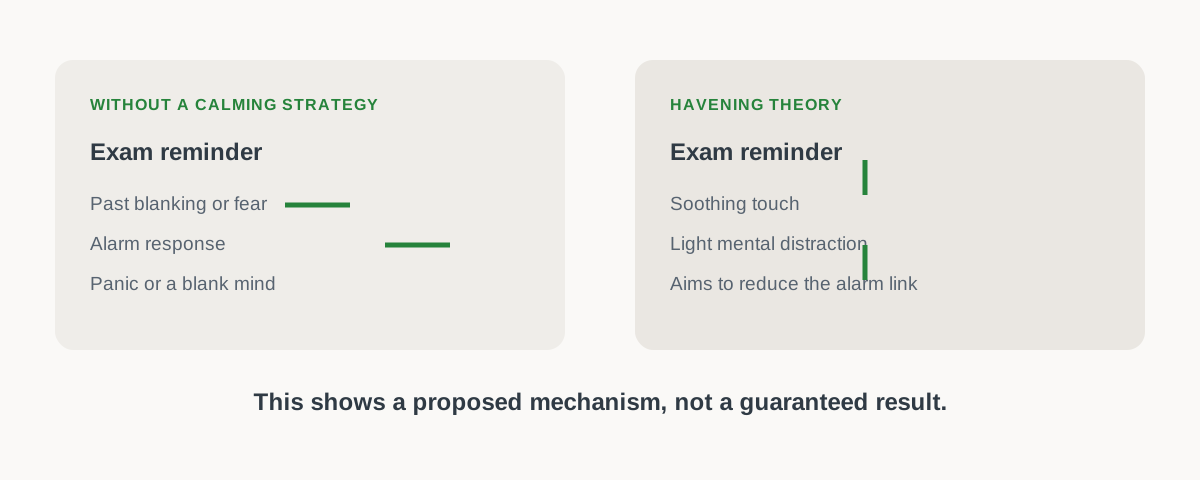
This is a proposed mechanism for Havening, not a guaranteed result.
What the research says about Havening
The evidence is early but consistent. In a study led by King’s College London, 27 adults struggling with anxiety, low mood and impaired daily functioning received a single Havening session. Their anxiety, mood and functioning scores improved clearly within a week, and the gains were still present two months later. A 2025 review in the journal Frontiers in Global Women’s Health describes the same pattern across case studies and points to an earlier pilot in which average traumatic-stress scores dropped by 75% within a month.
A caveat: most of this research is on adults, the samples are small, and there’s no large controlled trial yet. Havening isn’t a magic bullet and it isn’t a substitute for proper study preparation. But the speed of the effect stands out. Unlike approaches that need weeks of sessions, Havening often produces noticeable relief in a single sitting. For a child in the middle of exam season, that matters.
What this means for your child
For many students, exam stress is an alarm reaction. The brain predicts danger and floods the body with stress hormones, which is why telling a panicking child to just breathe often doesn’t help. The panic is driven by the emotional memory underneath their thoughts.
This is why, when I work with exam stress, I look beyond study skills alone. Practical preparation matters: how to revise, how to manage time in the exam room, how to approach different question types. But for students who blank, freeze, or unravel the day before, the emotional side needs to be met directly. Approaches like Havening sit squarely in that territory: techniques that calm the brain’s threat response quickly and gently, rather than reasoning with it.
A note of caution: Havening is a calming technique, not a treatment for an anxiety or mood disorder. If your child’s stress is persistent, severe, or reaches beyond exams into everyday life, or if you’re concerned about an underlying condition, start with your GP or paediatrician, and then a proper assessment, rather than relying on a technique alone.
What parents can do
- Name what’s happening. Blanking and panic under pressure are common, and they aren’t a sign of weakness or laziness. Calling it a misfiring alarm system takes away some of the shame.
- Watch the triggers, not just the marks. Pressure from high expectations, yours or theirs, was the top stress trigger in the research. Ask how much of the stress is coming from the child and how much from the room.
- Work with the body as well as the mind. Calming approaches, whether Havening, breathing routines or grounding exercises, act on a different level from study advice, and they can be learned quickly.
- Know the extra layer. A child with a learning difficulty often carries an extra layer of pressure, working far harder for the same result, and exam concessions may be available to level the field.
- Don’t wait for a crisis. The research found stress was already building a month before the exam. That’s a good time to reach out, not after a failed paper.
Frequently Asked Questions
What is the Havening technique?
Havening is a gentle psychosensory technique that combines soothing touch (usually slow, rhythmic stroking of the arms, hands or face) with simple mental distractions like counting backwards or humming a tune. It was developed by Dr Ronald Ruden and works with the brain’s emotional memory system, with the aim of weakening the link between a distressing memory and the panic it triggers. It’s not hypnosis, and you don’t have to retell upsetting details for it to work.
How can Havening help with exam stress?
Exam stress is often powered by emotional memory, like a past failure, blanking during a test, or the fear of disappointing people, and the body reacts to that memory as if it’s happening now. Havening works on that emotional charge directly, so the trigger loses its grip. Research on anxiety and workplace stress found improvements after a single session that were still present two months later. The studies are small and mostly on adults, but the direction is promising.
Is Havening the same as TRE therapy?
No. TRE (Tension and Trauma Releasing Exercises) works through the body, using gentle exercises that let the nervous system release stored tension through natural shaking. Havening combines gentle touch with mental distraction to recalibrate the brain’s stress response. They’re both body-aware approaches that can complement each other; which one suits your child depends on the full picture.
Where can my child get help with exam stress in South Africa?
I help students with exam stress in Centurion and Middelburg, blending emotional support with evidence-based, practical techniques for the exam room. Contact me to book a session, and online sessions may also be arranged if that suits your schedule better.
A gentle next step
If this sounds like your child, you don’t have to figure it out alone. Exam stress support starts with a conversation about what’s really driving the panic: the study habits, the thinking patterns, the body’s alarm system. For some students, releasing physical tension through TRE helps alongside. Whatever the picture, the goal is the same: your child walks into that exam knowing the work, and their body isn’t fighting them.
If you’re wondering whether this kind of support could help, get in touch. As a registered Educational Psychologist (HPCSA Reg. No: PS 0158127), I work with families in Centurion and Middelburg, and we can talk through what’s happening before deciding on a next step. You don’t need to have all the answers.