
As a parent, you know your child best. When something feels “off” with their learning, when homework becomes a nightly battle, when reading doesn’t click, when the school raises concerns, it’s natural to wonder whether a psychoeducational assessment might help.
What Is a Psychoeducational Assessment?
A psychoeducational assessment is a thorough evaluation of your child’s cognitive abilities, academic skills, and emotional functioning. It helps identify learning difficulties, attention issues, and developmental concerns, and provides a roadmap for support.
Reading concerns at different ages
Children learn at different rates, and age alone cannot diagnose dyslexia. The language of instruction, school experience, hearing, vision and teaching support all matter. These age guides can help you decide when to ask a teacher or professional for a closer look.
Can’t read at 5: what may be typical
Many five-year-olds are still learning letter names, sounds and the basics of blending words. Signs of dyslexia in a 5-year-old are not always clear, but ongoing difficulty remembering letter sounds, noticing rhyme, learning simple words or joining shared reading is worth mentioning to the teacher. One sign by itself does not confirm a learning difficulty.
Can’t read at 6: when to ask questions
By six, many Grade 1 children are beginning to read simple texts, although progress varies. If your child cannot connect letters and sounds after classroom teaching, guesses at most words, or becomes distressed whenever reading starts, ask what the school is noticing and what support has been tried. A conversation now can prevent months of waiting and guessing.
Can’t read at 7: when an assessment may help
By seven, persistent difficulty decoding basic words, reading much more slowly than classmates or avoiding age-appropriate books deserves a closer look, especially when extra support has not changed the pattern. Signs of dyslexia in a 7-year-old can overlap with language, attention, hearing or vision difficulties, so a psychoeducational assessment considers the wider picture rather than judging reading in isolation.
5 Warning Signs to Watch For
1. Reading difficulties that persist beyond Grade 1
If your child is in Grade 2 or beyond and still struggling with basic reading, mixing up letters, reading very slowly, avoiding books entirely, this may indicate a learning difficulty like dyslexia that a proper assessment can identify.
2. Homework takes much longer than expected
While some resistance to homework is normal, consistent 2-3 hour battles over work that should take 30 minutes suggests an underlying issue. The assessment identifies whether it’s attention-related, a processing speed issue, or a learning gap.
3. Strong verbal skills but weak written work
Some children are articulate and insightful in conversation but produce written work well below their ability. This “verbal-performance gap” is a classic sign that a psychoeducational assessment can investigate.
4. Teacher feedback mentions attention or behavior
When teachers report that your child “doesn’t focus,” “acts out,” or “isn’t reaching potential,” the issue may be ADHD, anxiety, or an unidentified learning difficulty that calls for understanding and support.
5. Emotional distress about school
School refusal, frequent stomachaches or headaches before school, and statements like “I’m stupid” or “I can’t do this” signal that the academic struggle is affecting your child’s emotional wellbeing.
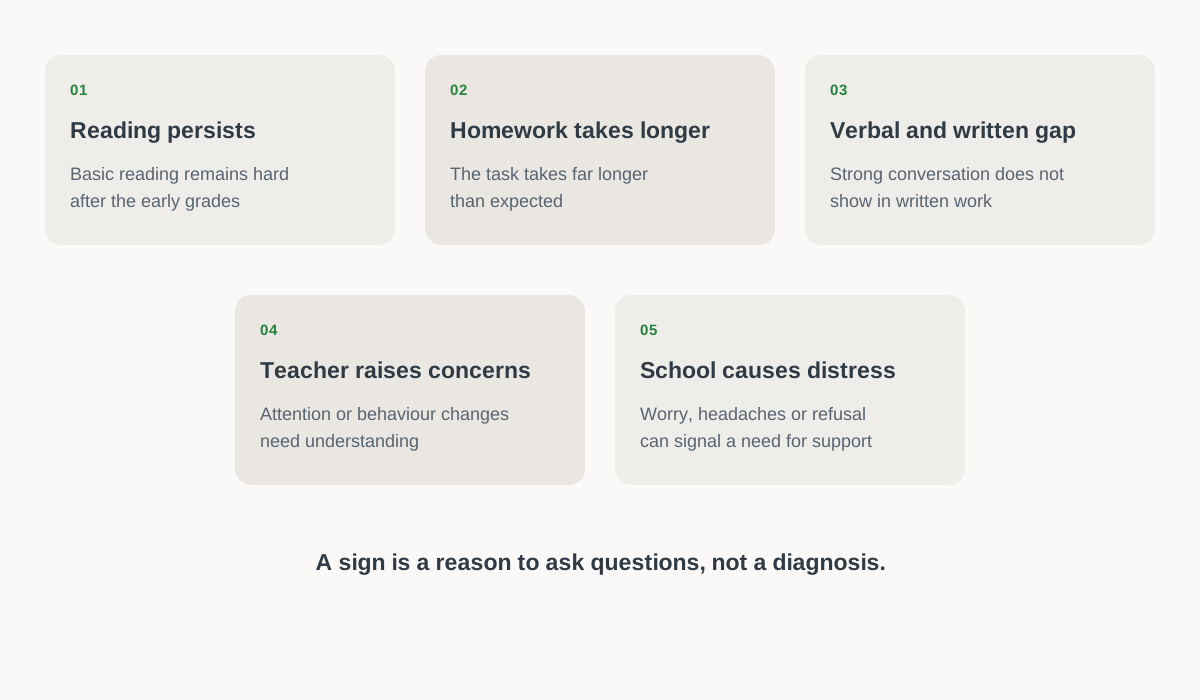
These patterns are reasons to ask questions, not a diagnosis.
Rule out the physical first
Before an assessment, one step matters: ask your GP or paediatrician to check the physical side. Headaches, stomachaches, or vision and hearing concerns can look remarkably like learning difficulties, and a child who cannot see the board or hear the teacher clearly will struggle no matter how well they are taught. An optometrist or audiologist can clear that quickly, and it makes the assessment results cleaner to read.
What Happens During the Assessment?
The process typically involves 2-3 sessions with your child (using play-based, child-friendly activities), followed by scoring, interpretation, a full report, and a feedback session where we discuss findings and recommendations together.
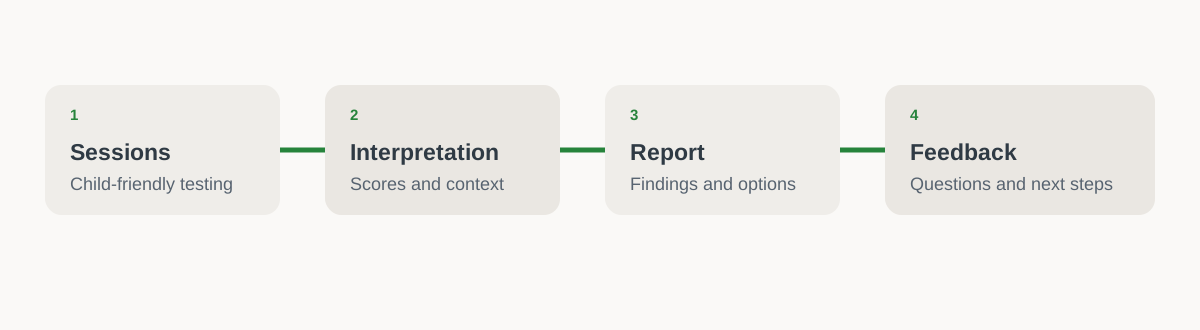
A psychoeducational assessment usually moves from child-friendly sessions to feedback and recommendations.
Next Steps
If any of these signs sound familiar, book a psychoeducational assessment in Centurion or contact me directly to discuss your concerns. Early identification and intervention often leads to faster progress and less frustration for your child.
If reading is the main concern, our guide explains how to test your child for dyslexia in South Africa and what information to take to the first conversation.
For related reading, learn about how dyslexia intervention programs work, explore our school readiness assessments for younger children, or start with our practical school readiness checklist for Grade 1 if you are weighing Grade 1 readiness in Grade R.
Wondering whether to start with an assessment, an occupational therapist or a psychiatrist? Our guide to OT, Educational Psychologist or psychiatrist for a child walks through who to call first.
If an assessment shows your child qualifies for concessions, our guide to the types of IEB concessions and accommodations explains what exam support looks like and how the application process works.